Stop the water
Shut off the main valve, strata shutoff, or appliance supply if safe. Do not enter standing water near electrical hazards.
Insurance & documentation
Shield documents every loss with photos, moisture maps, and drying logs — so your BC insurer has a complete file from day one. We mitigate first, then help you navigate scope and rebuild.
BC policies require you to prevent further damage. Mitigation starts immediately — Shield extracts, dries, and documents while you open the claim with your insurer.
First 24 hours
The first day sets the claim. These steps protect your property and give your adjuster what they need — without delaying emergency mitigation.
Shut off the main valve, strata shutoff, or appliance supply if safe. Do not enter standing water near electrical hazards.
Mitigation cannot wait for adjuster approval. We dispatch 24/7 with a 60-minute target across Greater Vancouver.
Photos and video of active damage help — but do not delay extraction. Our crew continues documentation on arrival.
Open the claim when you can. We provide moisture logs, drying records, and a written scope for your adjuster.
Documentation
Adjusters need proof — not promises. We build the file during mitigation so you are not assembling paperwork after the emergency.

Wide and close shots of affected rooms, water lines, and source before extraction changes the scene.
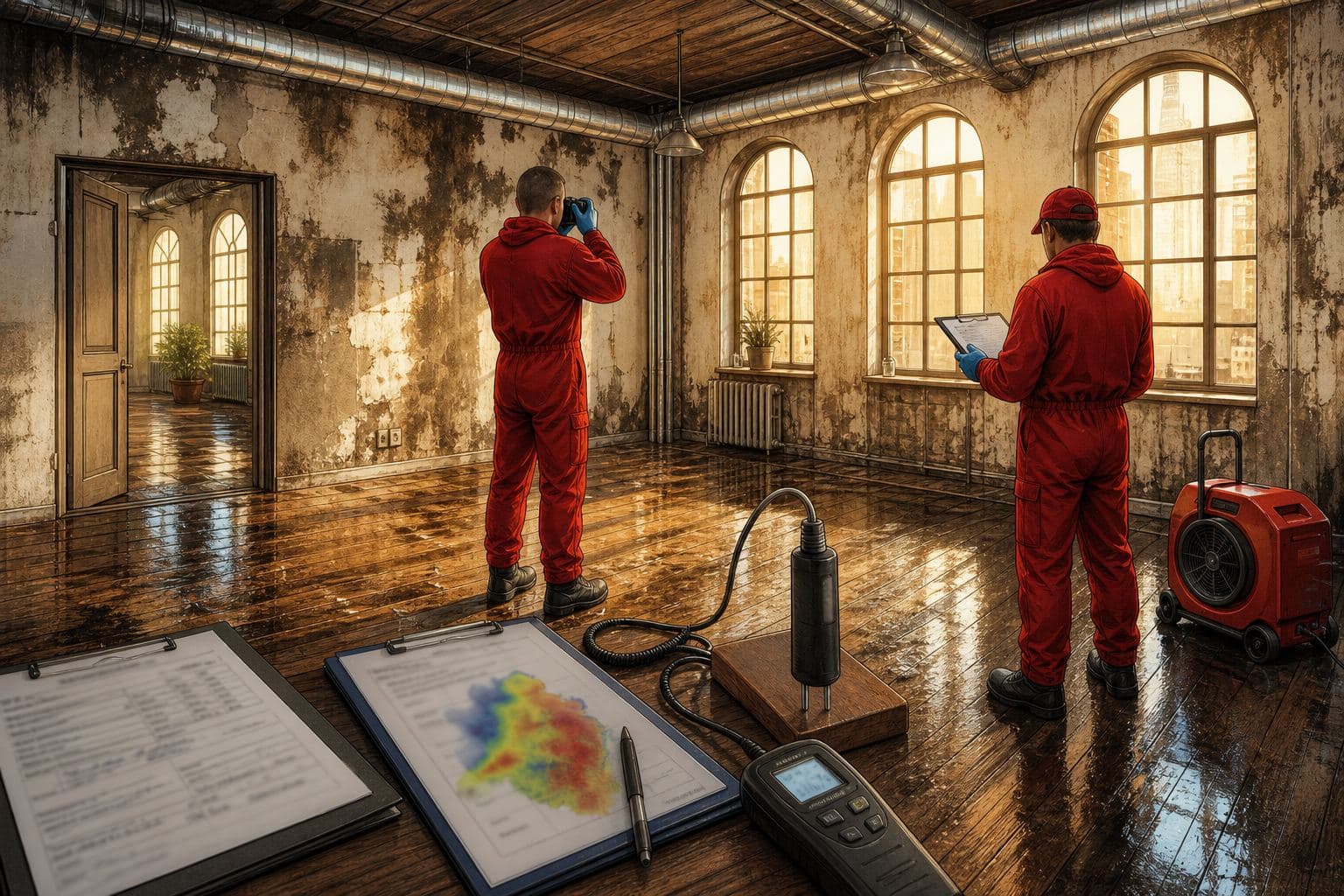
Readings at marked points in walls, floors, and cavities — not guesswork about what is actually dry.
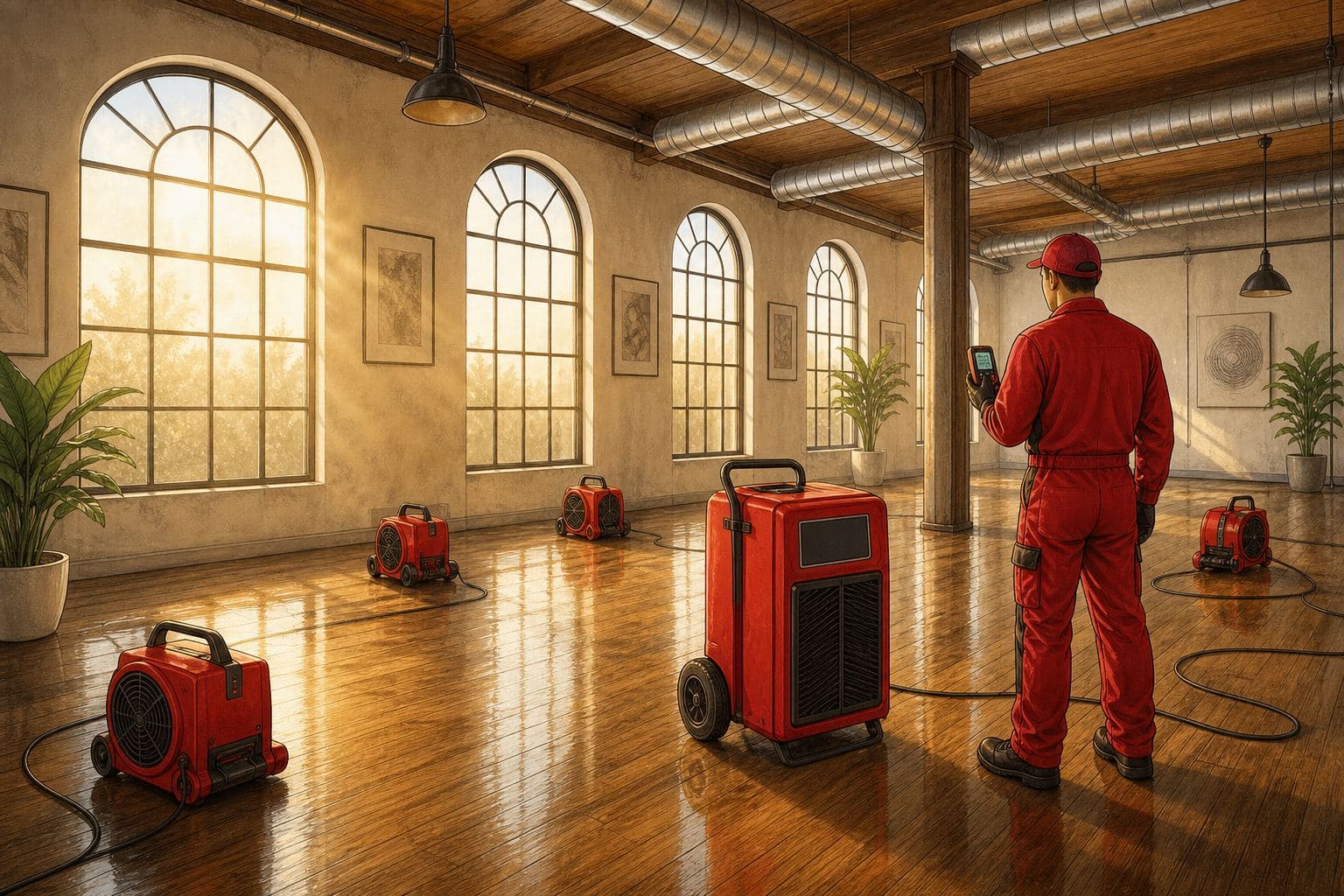
Equipment placement, temperature, humidity, and progress notes while dehumidifiers and air movers run.
Photos, logs, line-item scope, and material specs assembled for your BC insurer — not a folder you build yourself.
01 · Emergency mitigation
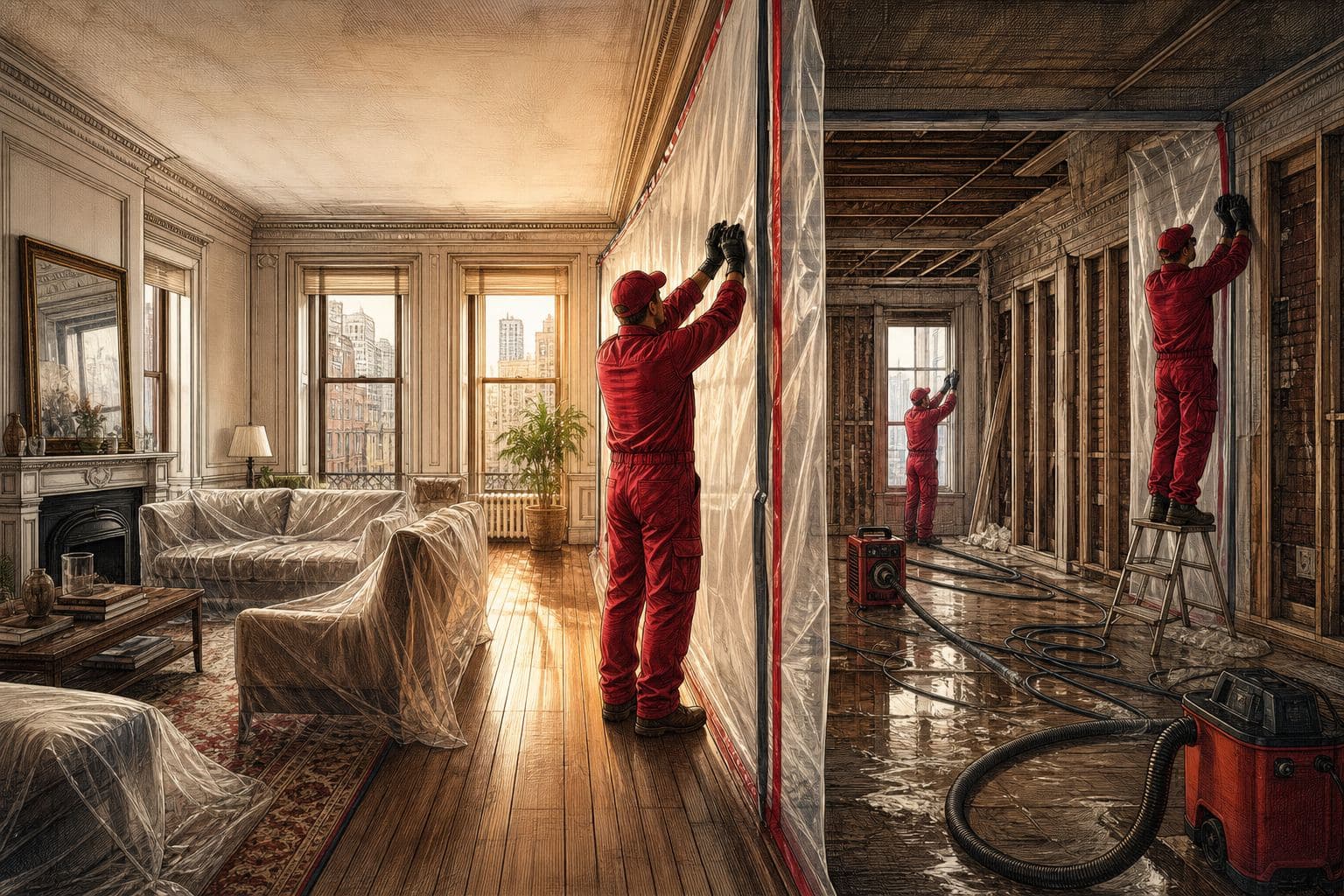
Extraction, drying, treatment, and containment run immediately. Documentation is part of mitigation — not paperwork you chase after the crew leaves.
02 · Scope & rebuild
Once readings pass, unsalvageable material is identified and a rebuild scope is written. Insurance restores what was there; upgrades are your written choice.
Typical timeline
Every loss is different — but this is the sequence most Greater Vancouver homeowners and stratas follow on a standard water damage claim.
Hour 0–4
Crew arrives, extracts standing water, stabilizes the loss, and starts the insurance photo record.
Day 1–3
Commercial equipment deployed. Moisture map created. You know what is wet and what can stay.
Day 3–14
Daily readings until industry dry standard. Logs updated for your adjuster throughout.
After dry-out
Written rebuild scope submitted. Demolition, restoration, or upgrades authorized in writing before work starts.
Strata & property managers
Stack leaks, riser failures, and appliance floods in condos and townhomes affect more than one unit. Shield documents the full loss and coordinates with building staff.
Need help now? Call (778) 654-6742
Free resource
A practical PDF for Greater Vancouver homeowners and property managers — what to do after water damage, how insurance typically works in BC, and how Shield documents the loss for your adjuster.
Keep a copy on your phone before you need it — especially if you manage a strata, rental, or commercial property in the GVA.
Read the emergency checklistFAQ
Shield — documentation and claim support across Greater Vancouver.
No. BC policies expect you to mitigate further damage immediately. Call Shield first — we extract and dry while building the documentation your adjuster needs.
Photo and video records, moisture maps, daily drying logs, equipment records, and a written scope of affected materials. We assemble the file and submit it when authorized.
We work with most major BC insurers and can coordinate billing when your policy allows direct vendor payment. You receive clear invoices and scope documents either way.
Mitigation is emergency extraction and drying — urgent and time-sensitive. Rebuild is structural repair and finishes after the structure is dry. We separate both in your written quote so the claim file stays clear.
Yes. We regularly work with stratas across Greater Vancouver — coordinating access, documenting multi-unit stack leaks, and providing moisture logs suitable for council and insurer review.
Yes. Insurers expect professional drying to measured standards with logs to prove it. Stopping early or skipping documentation can lead to denied secondary damage or mould claims later.
Insurance typically covers restoring what was there. While walls are open you may authorize upgrades in writing — Shield builds what you approve on the same project.
Yes. Download the Shield Insurance Handbook anytime — a practical guide for Greater Vancouver homeowners and property managers on first steps, BC insurance basics, and how we document losses.
24/7 emergency
We extract, dry, and document — then stay for the rebuild if you need it.
(778) 654-6742